

 © Manuela Jans | Lucerne Festival
My American Dream
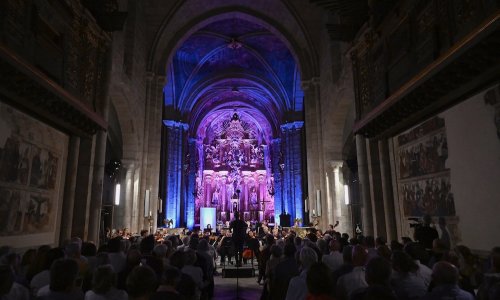
I have wanted to visit the Lucerne Festival for as long as I can remember, but it was last year, whilst preparing for Amsterdam’s Mahler festival that I knew the moment had come. Every time I searched for a Mahler symphony, there, at the top of the list was the Lucerne Festival Orchestra under their legendary maestro, the late Claudio Abbado, producing performances that simply leave you longing for more. The romance surrounding Lucerne’s annual summer festival was something I wanted to witness first hand. What is it about this small Swiss city which attracts such a dazzling array of classical music talent? And why do orchestral musicians return, year after year, to play in a concert hall perched on the side of a lake surrounded by some of the most beautiful scenery one could ever hope for.
Context is everything, and never more so than when understanding Lucerne Festival’s place in the classical music world. Through the years, Lucerne has been a place of refuge. A place where family matters, where those who have come before are honoured, and where history, while rarely mentioned, is quietly acknowledged.
The festival dates back to Arturo Toscanini’s first concert on 25th August 1938 following his boycott of Germany’s Bayreuth Festival in 1933 when he refused to perform in front of Hitler, and again in 1938, his refusal to perform at the Salzburg Festival following Germany’s annexation of Austria. Where Toscanini led, others followed, namely the conductor Bruno Walter, cellist Pablo Casals, and pianist Vladimir Horowitz.
So, what can we expect this year? Over the course of four weeks starting in mid-August, Lucerne will host 120 events with 20 symphony orchestras appearing in just one month, plus a number of free events, special programs for school children and a newly conceived street festival.
 © Manuela Jans | Lucerne Festival
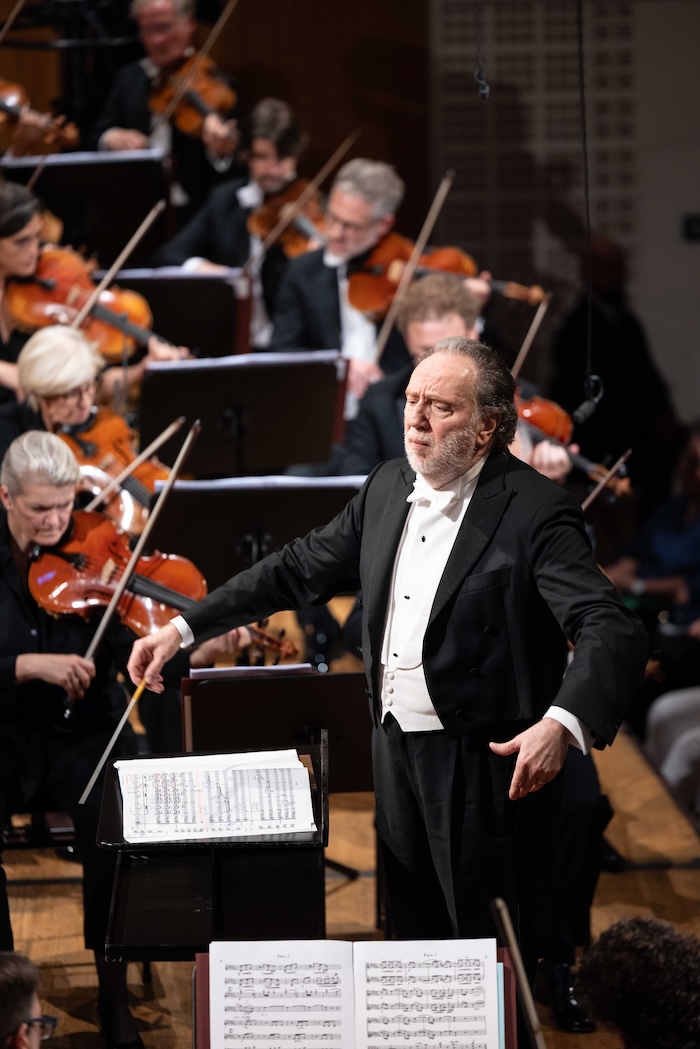
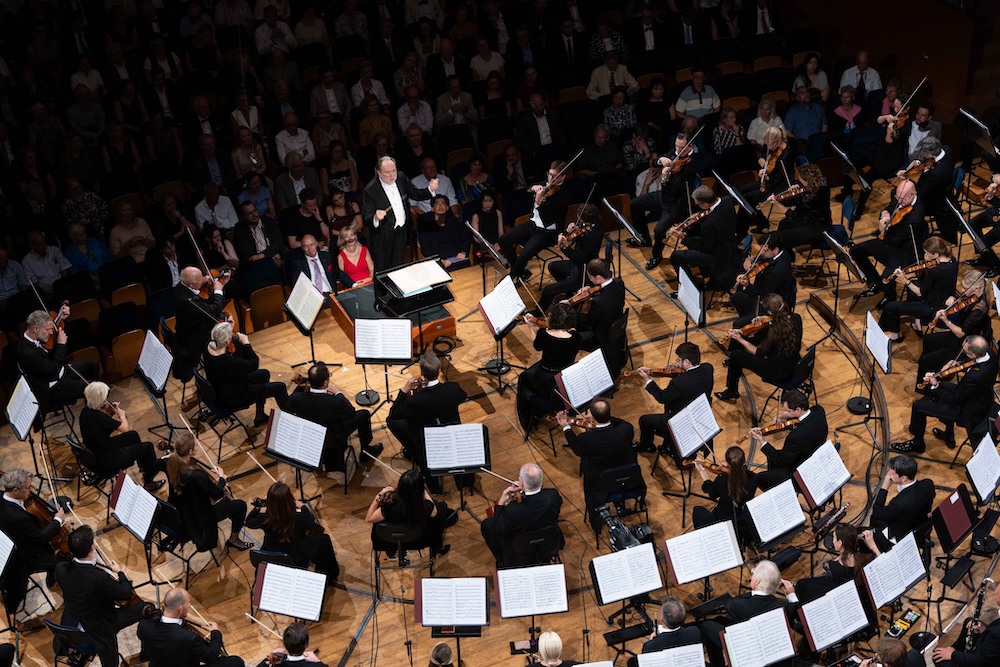
At the centre of everything now is the Lucerne Festival Orchestra (LFO), which in its present reincarnation revolves around a core membership of the Mahler Chamber Orchestra. Historically, chamber musicians handpicked by Abbado, sat alongside colleagues from the Berlin and Vienna Philharmonic. Today, such players are few and far between. Instead, the net is spread wide with musicians predominantly from German, Swiss, Italian and Dutch orchestras with the occasional Scandinavian, Spanish and French orchestra member thrown in for good luck.
Festival director Sebastian Nordmann, hosting his inaugural summer program, touched on the festival’s history in short interviews given on the first evening. The most enlightening was with veteran trumpeter Reinhold Friedrich who first came to Lucerne as a member of the festival youth orchestra under Abbado. Together, they framed Lucerne as the essential summer destination for top ensembles and conductors through the years. Greats such as Herbert von Karajan, Wilhelm Furtwängler, Bernard Haitink, and since 2015, Music Director Riccardo Chailly. The place for audience and musicians alike to dig deep, whether it be Mahler under Abbado, or Rachmaninov under Chailly. Friedrich’s response as to why he returns year after year to this highly fashionable lakeside resort: ‘Because there is simply nothing more beautiful!’ brought the house down. As did his amusing depiction of sitting sweltering at the beach with ‘sunscreen oozing into his eyes’ when instead he could be sitting in a cool, air-conditioned hall with friends recreating the music of his youth.
 © Patrick Hurlimann | Lucerne Festival
2026 sees violinists head the star-studded lineup. Probably the most significant sees Anne-Sophie Mutter mark her 50th anniversary on the very stage she launched her career in 1976, aged just 13. Her performances will include works by the Iranian composer Aftab Darvishi plus Krzysztof Penderecki’s Second Violin Concerto with the Pittsburgh Symphony Orchestra under Manfred Honeck. Artist-in-residence, violinist Augustin Hadelich brings Beethoven with the Berlin Philharmonic, and Barber with Klaus Mäkelä plus a recital with Seong-Jin Cho which they will recreate later in the year for Spanish audiences in Madrid and Barcelona. Continuing the violin streak, Hilary Hahn’s Dvorak with the Vienna Philharmonic will undoubtedly be rather special after time off last year for back surgery.
Isabelle Faust and Simon Rattle with the Freiburg Baroque Orchestra are just some of the guests combining a trip to Lucerne with a visit to London’s BBC Proms. Elim Chan, the Munich Philharmonic with Martha Argerich (who made her Lucerne debut in 1960), the Met Orchestra with Yannick Nézet-Séguin and Joyce DiDonato, followed by Yuja Wang and college-friend Teddy Abrams, all add to the very international flavour.
 © Patrick Hurlimann | Lucerne Festival
With this year’s American Dream theme ringing loud, pictures of Nézet-Séguin’s hands on programmes and posters dotted liberally around the city, and a sea of flags and banners wafting gently in the mid-August breeze, I was reliably informed by a whole host of local and loyal audience members, that this year’s opening would be slightly different. In addition to the very formal opening concert attended by local dignitaries, two new free events would set the tone. The first, ‘an overture’. Essentially an open rehearsal with the LFO and Riccardo Chailly. Their rather ‘seat of the pants’ run through of Mambo from Bernstein’s West Side Story (which I would hear three times over the course of my week) did leave plenty of room for improvement.
As the sun went down, events moved outside to a recently built stage for Sarah Willis and the Havana Lyceum Orchestra to party the night away with numbers from her 2020 Mozart y Mambo set combining ‘much-loved pieces for French horn with traditional Cuban music’. Many tourists embarking the recently docked cruise liner, eagerly honking its horn in approval, readily joined the fray. However, the very polite applause perhaps indicated that I was not the only one wondering why a festival which positions itself at the centre of cutting-edge musical offering, resorted to a six-year-old project for its opening event. Why not commission something new?
 © Patrick Hurlimann | Lucerne Festival
Returning the following evening, audience members could choose between performances inside, or a free live broadcast on the green outside. Seated in the hall, Steve Reich’s New York Counterpoint in the version for eleven clarinets under Nina Haug (a member of the contemporary-conducting programme) felt like a warm embrace. Her animated and energetic direction summoned evocative and intensely ‘electronic’ fragments which gently morphed into one another. Sounds which Reich could probably only have dreamed of at the work’s premiere in 1985. Deep, throbbing bass clarinets with their funky riffs generated live reverb like partygoers gatecrashing a very trendy New York gathering, such was their ability to transport. A very 1980s American Dream.
Next on the programme, a polished rendition of Gershwin’s Cuban Overture from Chailly and the LFO. Warming to Gershwin’s language, young German pianist Frank Dupree gently invited all into his drawing room for a little light entertainment from Gershwin’s Piano Concerto in F. A woozy trumpet solo, rasping horn and plaintive oboe set the tone for Dupree’s cheeky tones. But where were the distinctive American colours and rhythms which pulsate through the body? No matter how hard the double basses tried, the piano never quite found those groovy, black syncopations. Chatting the following day, I asked if he found any creative solutions for Gershwin’s many virtuoso demands including huge left-hand chords? Perhaps… but none he was willing to disclose.
 © Priska Ketterer | Lucerne Festival
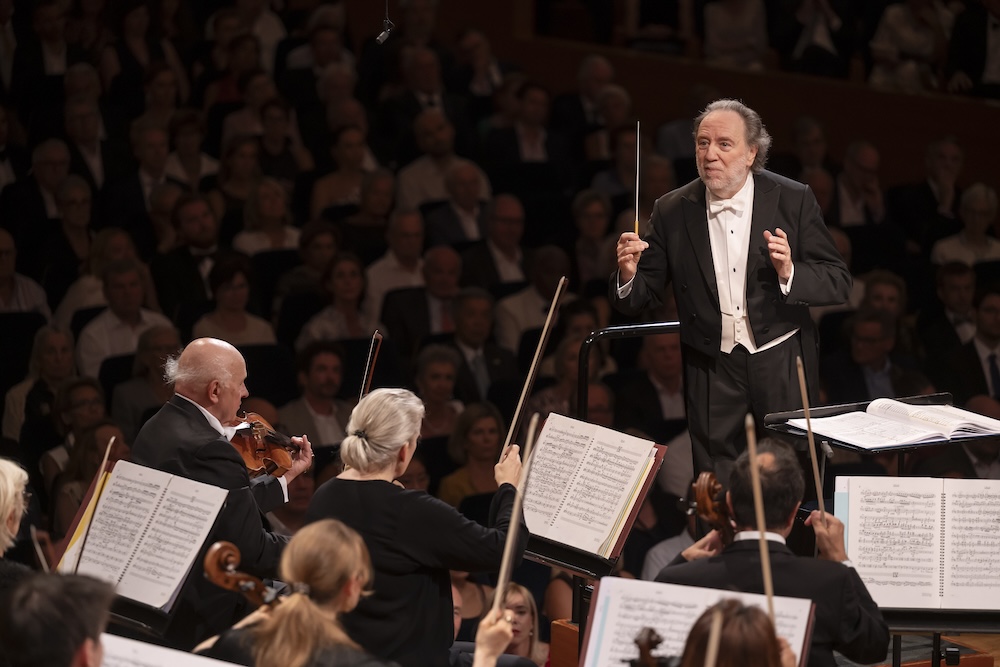
The real find of the evening came after the interval: Charles Ives’ surprisingly attractive First Symphony, devoid of the angst and harmonic dissonance so associated with his later works. Spanish cor anglais player Miriam Pastor’s seductive solo lifted proceedings, leaving audience members straining in their seats to hear more of Ives’ much neglected yet poignant melody.
Speaking later that evening, Pastor (Royal Concertgebouw Orchestra) shared her thoughts about playing under the Italian maestro and just how challenging Ives’ music can be. ‘Chailly said he would only start when I was ready, but after the first movement, his body and eyes had already relaxed. He was a changed man. It’s incredible how he took such a round breath indicating what type of sound he wanted. He lets you take the time you need, and you can see in his face if he is pleased. He built the harmonic tension beautifully so my solo could float over the top. Such intensity from the beginning to the end of the phrases.’
 © Patrick Hürlimann | Lucerne Festival
Without a doubt, the highlight of my week was Augustin Hadelich’s collaboration with Klaus Mäkelä in Barber’s Violin Concerto. Their close rapport, obvious to all. Hadelich’s warm tone quickly morphed into explosive zeal, but every single note was crystal clear, and everything was beautifully phrased. Under Mäkelä’s focused gaze, the LFO followed Hadelich’s lead as glamorous string melodies vied with metallic brass. Now in the distance, the strings beckoned a lonesome oboe before Hadelich’s violin seemed to carry the sins of an entire nation. Bleak intensity found ultimate resolution. Setting off apace, there was not a bump in sight. Simply divine.
Returning to the stage an amazing six times in total, Hadelich’s absorbing and hugely virtuosic arrangement of Ervin T. Rouse’s 1938 Orange Blossom Special, a veritable melting pot of American musical styles, captivated this very appreciative Lucerne family.
Similarly, the LFO’s reading of Stravinsky’s Firebird Suite did not disappoint. Conducting from memory and apparently in complete contrast to the rehearsal, there was barely a beat from the podium, just shapes articulating the phrase. Mäkelä in turn encouraged, cajoled, calmed, enticed and unleashed. The music, so vivid and colourful, that in the words of one on stage, ‘it was almost like watching a movie’. Swarming violins, fluttering flutes and tentative muted horns. This was the Lucerne Festival Orchestra I had been waiting to see. Frenetic twisting and turning, manic cellos, an expansive clarinet and an angelic piccolo aroused the soul, as Mäkelä whipped Stravinsky’s mêlée into a fury, leaving bassoons to pick up the pieces in this new, desolate world. Tonight in Lucerne, abject terror sat alongside quiet calm, for which other composer entrusts such darkness upon an entire bassoon section complete with two contrabassoons? Bravo to principal horn Ivo Gass (Tonhalle Orchestra Zurich) for a series of exquisite solos.
 © Patrick Hürlimann | Lucerne Festival
Equally inspiring was the climax of Chailly’s Rachmaninov cycle: Four Symphonic Pieces from his opera Aleko heard on Tuesday. Again, Pastor’s tender cor anglais solo stole the show before lower strings, in music straight from the Russian ballet book, found limping bassoons chasing an evil baddy. Would the scurrying violins escape his evil grip and live to see another day?
Also of note, Lukas Sternath’s luxurious reading of Rachmaninov’s Fourth Piano Concerto which moved seamlessly between dark, lumbering climaxes and teasing phrase ends. But it was his intensely personal reiteration of Rachmaninov’s falling melody in the Largo, matching the silky-smooth strings, which will stay long in the memory. Sternath’s delicious right-hand quite simply tells a thousand tales. And those melodies kept on coming in his encore, Rachmaninov’s Prelude Op. 32 No. 5
Aside from the constant flow of top performing talent, much time and attention over the years is devoted to training the next generation of musicians. Heading up three programmes within the Festival Academy, Lucerne’s new Artistic Director, clarinettist and composer Jörg Widmann. Each discipline works in tandem to bring together young talent from all over the world. The first, the Contemporary-Conducting Program led by Baldur Brönnimann (Royal Galician Philharmonic) helps four young conductors at the beginning of their career in a three-week-long programme, designed to broaden their minds and create the forward-thinking visionary conductors of the future who think outside the classical music box. Students view the Academy as one of the most coveted international conducting academies in the world because besides being completely free, they have access to fantastic coaches and visiting artists as well as a multitude of performance opportunities.
 © Manuela Jans | Lucerne Festival
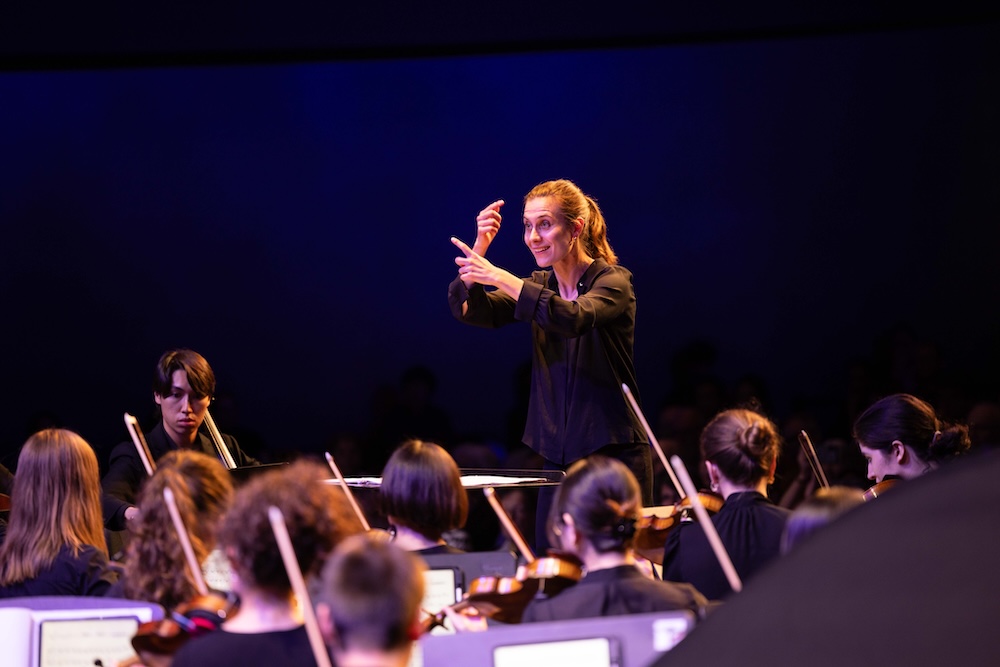
I met young Finnish conductor Aliisa Neige Barrière, daughter of the late Kaija Saariaho, on the very first day and followed her progress through the week as she juggled assisting Jörg Widmann in rehearsals of Wolfgang Rihm’s Tutuguri; assisting her mentor Baldur Brönnimann in a trilogy of works by composer-in-residence Mark Andre; plus leading colleagues of the Lucerne Festival Contemporary Orchestra (LFCO) in rehearsal for Frank Zappa’s Yellow Shark and rehearsals of four specially commissioned works by members of the Composer’s Seminar. The most interesting of which was Melt by young American composer Miles Walter. The young musicians revelled in finding his musical arc whilst amidst all the orchestral flickers, actual tunes emerged – snippets floating between players. Jazzy tuba riffs from Japanese tuba player Sota Yamamoto (who I had sat beside earlier in the week as we listened to Frank Dupree’s Gershwin) had the invited audience nodding their heads and bopping in their seats. Some very stylish horn writing accompanying a cello and viola ‘melody’ (featuring the odd chord that occasionally resolves…) I later learnt was inspired by years sitting behind an organ playing American hymn tunes. Trinity College, Cambridge (UK) where Walter will head next month as Fellow Commoner (composer-in-residence) has made an inspired choice.
As the rehearsal progressed, all the things which course tutors Dieter Ammann and Unsuk Chin had pointed out earlier in the week now became clear for the six young composers. Amman’s talk of creating layers of perception: creating a landscape with a tower, mountain, playing field and even miles of nothing as something for a listener to grab hold to; the ability to create friction so musicians and listeners alike know the direction of travel using rhythm as a device to drive music forward whilst simultaneously creating overall shape and form; and his analysis of tonality, questioning if the composer’s intentions were deliberately tonal or just completely random, all made sense. Chin’s emphasis on the importance of a narrative – about giving the listener something to take away as opposed to a succession of fragments; and her suggestion that small things can become interesting if used as part of something bigger, was astute and to the point.
For me, these comments all pointed to the elephant in the room: the commercial viability of any new work. Not just in securing that all important initial commission, but in ensuring repeat performances. What, I wondered, will these young composers do with this hugely practical advice? Will concepts be amended, or will professional egos and dogged determination get in the way?
The one question on my mind though: Had Unsuk Chin completed her upcoming commission – a new concerto for virtuoso trumpeter Håkan Hardenberger? ‘No, not quite!’ she replied… Would she find inspiration on Lucerne, and would a little piece of Switzerland find its way onto the New York stage, for the premiere in just four months?
 © Manuela Jans | Lucerne Festival
Returning to thoughts of dogged determination, this must surely have played a part both in the creation, and reincarnation of the most daring production of my week. Life for audience and musicians alike may never be the same after witnessing Wolfgang Rihm’s Tutuguri conducted by Widmann, accompanied by Michael Engelhardt’s vivid, and wonderfully bizarre narration. All involved, especially the young members of the LFCO deserve highest praise. Rihm’s Poème danse for ‘very large orchestra, 7 percussionists/drummers, pre-recorded chorus and narration’ was inspired by French theatre visionary Antonin Artaud’s poem depicting ritual death amongst indigenous Mexicans. As seven totemic drummers eventually became twenty-one percussionists (as other orchestral members joined the ranks), page after page, after page of apocalyptic horror led us deep into a never-ending purgatory. Quietly, I begged my God for the barrage to cease. But just when you thought the end was nigh, a huge, brightly lit circle of white light filled the hall, drums morphed into a chorus of guiros, and pre-recorded vocals and off-stage gongs placed variously around the balconies accompanied Engelhardt’s desperate pleas as he stood prostrate, almost Christ-like, begging for forgiveness. Such animated and inspirational direction from Widmann. This is a performance which I suspect many will remember for years to come.
 © Priska Ketterer | Lucerne Festival
Wednesday night’s concert featuring the brass of the LFO sent me on my way. In a fabulous arrangement by Manfred Honetschläger, the big band swing of Gershwin’s March from Strike up the Band with two piccolo trumpets soared the heights. Time stops for no man they say, but as the Lucerne brass family dedicated Samuel Barber’s Adagio to former tuba player Thomas Keller (Staatskapelle Berlin) who sadly passed away last October, the mood turned reflective. From Sebastian Berner’s (Frankfurt Radio Symphony) opening flugal note, fabulously resonant low tuba notes and Alexander Verbeek’s (Rotterdam Philharmonic) euphonium solo all pierced the heart. The lower brass kept matters under wraps for as long as possible. So restrained, so subdued, and so mournful. Many of the players were visibly struggling to hold back tears.
All that was left was for director Steven Verhaert to lead Eric Crees’s very classy arrangement of Bernstein’s Suite from West Side Story (originally written for the Phillip Jones Brass Ensemble, London) and revive the American Dream. Fearsome horns in the Mambo, a very funky and groovy Cool. Fugue. Boppy, and Somewhere’s huge dynamic range, all built to a glorious finale. Their encore, Verhaert’s arrangement of Bernstein’s One Hand, One Heart left everyone on a high.
What then does the Lucerne Festival mean, not just to the audience, but to those on stage? Young Royal Concertgebouw Orchestra bassoonist Javier Sanz Pascual, sitting on stage earlier in the week beside his Amsterdam colleague and mentor Simon Van Holen, summed up perfectly what it meant to him. ‘This orchestra is like the Champion’s League. I sit alongside the best players and absorb a tradition of sound going back many years. Studying in Madrid at the Escuela Superior de Música Reina Sofia, I was surrounded by teachers like Jacques Zoon, Lucas Macías Navarro and Jens Peter Maintz who would share their experiences about playing in Lucerne each summer. Joining the LFO this year, my American Dream has come true.’